Latest GPT Finetuning Workshops in Copenhagen

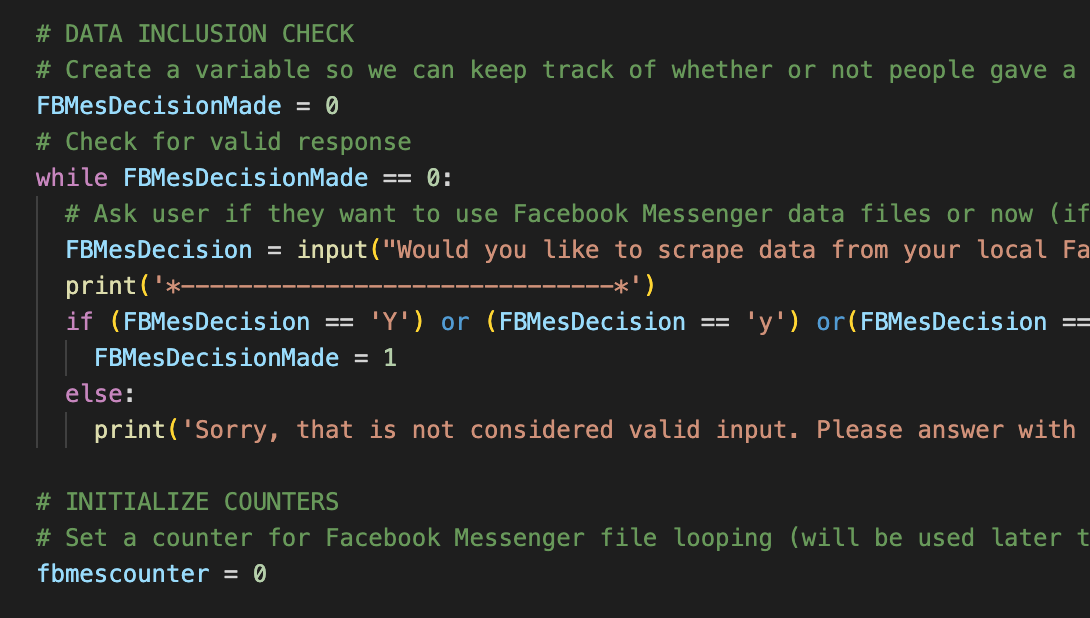
Last week, Mirabelle Jones and I organised the latest iteration of our—somewhat experimental and, some might say, risky—workshop study series, in which we invite Python novices and aficionados to finetune (i.e., create) their own version of GPT-3, based on their own social media posts and messages. We did so at the beautiful AI Pioneer Center of the University of Copenhagen.

Some of you may remember GPT-3 from the summer of 2021—now considered ages ago in AI-terms—as one of OpenAI’s so-called large language models (LLM). In fact, at the time, it was one of the most advanced models out there (now, it has already been surpassed by a number of newer versions, most notably ChatGPT and GPT-4). While GPT-3 has existed since 2020, it was in 2021 that OpenAI had made finetuning GPT-3 available to anyone with an OpenAI account.

Finetuning, as the word implies, comes down to the molding and adapting of an existing LLM to more accurately reflect certain characteristics of a finetuning dataset. For example, generic LLMs face criticism because—having been built on normative, homogeneous datasets—they tend to misrepresent or be insensitive to minorities (whose data usually are underrepresented in the training datasets). Why, you might ask, are we not using ChatGPT? Unfortunately, the newer versions of GPT are not open to finetuning. Hopefully this might still become possible in the near future.

Our aim for the workshop study was to teach others how to create a personalized ‘chatbot’ based on their own social media texts. Once participants have their personal LLM, my specific angle of interest was to see if there are any insights they might glean from chatting with this potential window into their online personas.

Having run two earlier versions, we decided for this iteration to include an in-person aspect, and this was by far the best approach for the level of intensity and time this workshop requires. We had also made significant improvements to the process since the previous iteration (e.g., going from participants manually assembling their finetuning dataset to using my improvised scraper script).

However, as is always the case with hands-on activities: be prepared to face the unexpected. Multiple ✨exciting new errors✨ popped up that I hadn’t encountered before when using the scraper script—some of which we were able to troubleshoot on the spot, while others could not be solved within the timeframe we had. Fortunately, we had some wonderfully patient and engaged participants in our groups, and thanks to them, we learned a lot!

Based on the last two workshops in Copenhagen, we are planning on improving our process, and I will definitely be making changes to the script to ensure an even better and smoother result the next time. Mirabelle and I both look forward to inviting even more curious minds to our next iteration of GPT finetuning workshops, which will take place in the Netherlands.

The Relief of Completion

Recently I gave an interview with VICE Netherlands about completionism tendencies when playing video games. If you’ve ever played video games, you’ll likely recognise this feeling: wanting to collect all the collectibles, complete all the open quests, and basically just “100%” the game.

While preparing for the interview, I delved into the literature for some background research about what may underlie the completionist tendencies that many gamers have. As a self-care side note; don’t worry, you’re not any less of a gamer if you’re fine with putting the game down whenever you’re done with it (whether it be after 2 hours, or 200). (:

Back to completionism. I know from personal experience that it can be extremely satisfying to complete reveal all the parts of the over-world map, collect all the treasures (I’m looking at you, Assassin’s Creed) and all that jazz. Some games just have an enormous amount of collectibles, and it can be very tempting to go full ‘gotta catch ’em all’. But why do we have the urge for completionism? Why do we enjoy seeing 100% on our save files? What makes it so satisfying to have all the boxes ticked?

From my neuroscience background one thing immediately came to mind. In games, we are often somehow rewarded for gathering/attaining 100% of a certain thing. The positive reinforcement system in video games and its impact on the chemicals in our brain is well-documented. For instance, a 1998 scientific paper published in Nature found that video games do indeed stimulate the human body to produce the neurotransmitter dopamine, which is heavily involved in making us feel good.

Apart from this positive motivator for completionism, however, I also stumbled upon a negative motivator: the Zeigarnik effect. The effect is named after the Lithuanian-born psychologist Bluma Zeigarnik, who found in her studies that people were a lot better at remembering tasks that had not yet been completed than tasks that had. In other words, unresolved tasks remain stuck in our brains, creating a sort of tension that’s hard to get rid of unless the task is resolved.

When the tension is resolved, it makes us feel great (likely because even more dopamine is released!). In fact, University of Sheffield researcher Tom Stafford has once stated that he thinks the king of classics, Tetris, is an evergreen video game for this exact reason: with every block that appears on the top of the screen, a new unresolved task is offered. We take care of the block, the task is resolved, and we feel great! The fast-paced continuous waterfall of tasks and resolutions keeps us in a loop of tension and reward, explaining Tetris’ continued appeal over the years.

The Zeigarnik effect thus further sheds light on why we enjoy completion so much. All of a sudden, I realised that this effect does not only apply to video games, but also social media! Many young people I’ve talked to about social media have expressed the feeling of needing to get rid of the little red notification bubbles just for the sake of getting rid of them.

Although having a name to go with the feeling doesn’t explain anything necessarily, I still feels as though I can understand myself and others a little bit better with this knowledge. I’m already looking forward to telling my future study participants about the Zeigarnik effect next time we discuss their social media experiences. (:

The birth of Excavo

The past year has been interesting, to say the least. I am happy to say, though, that my past 12 months have not only been dominated by the COVID-19 pandemic. In fact, I’ve learned a lot of new things and experienced a lot of new things in my PhD in these last 12 months. As you’ve been able to read in an earlier post, Quality Zooming, doing focus groups with young adults has been an awesome part of that.

Why, exactly, was I doing focus groups, you may ask? Well, as it happens, the start of the pandemic coincided—for me—with the birth of a new project, one that is a part of my PhD and yet is much more than that. This project, called Excavo, will require more than one post to explain everything, but I’m excited to finally be sharing some details about what Excavo is, and how it came to be.

Let’s start with its origin story. In my research at GEMH Lab, I’ve focused on youth social media use. Specifically, I’m interested in what young people do on social media, why they do it, and how it makes them feel. Early on in my PhD, I’ve made it my mission to get detailed, reliable data and I’ve had the pleasure of conducting intensive interviews with many young adults about the specifics of their social media use. I found it especially striking that young adults are generally drawn to social media, but afterwards may feel like they have wasted their time. This may seem like an obvious thing, but if you think about it, it suggests that there’s something weird going on.

Obviously social media offer tons of opportunities. In theory, social media present us with the opportunity to keep in touch with friends, find new friends, find jobs, share and find interests, find entertainment and develop our identities. However, as The Social Dilemma on Netflix has illustrated, there are some serious and valid concerns regarding how social media are designed. The young people I spoke to indicated they feel like they’re hardly in control of how much time they spend on social media, and how they spend this time. Notifications, an endless ever-refreshing feed and other design aspects of social media are part of the problem, but—call me cynical—I don’t think we’ll be able to change existing social media anytime soon. Putting aside all the theory behind what makes for good wellbeing (spoiler, a sense of agency (i.e., being in control of your choices) is important), it is clear that some (not all!) adolescents struggle with their relationship with social media, and something needs to be done.

From this realisation, Excavo (Latin: “I unearth”) was born. I’m beyond excited that this second half of my PhD I got the chance to turn science and data into something tangible and practical. Having gathered all these insights from over a hundred interviews with young adults, we decided to create a digital tool to help young adults take matters into their own hands and regain control of their relationship with social media. A crucial part of this app is about helping young people reflect on how their time on social media is spent exactly, and whether or not this is in line with what they find important and interesting in life.

Of course, this isn’t only tricky to know for our target audience, 17-25 year olds. Figuring out what you want and value in life ánd living by those things can be hard for anyone, which is why I hope that even if you’re not a young adult anymore, you’ll let me know in the comments what you think of our endeavour. (: I look forward to sharing more about Excavo in the future.

Quality Zooming

In the time since the COVID-19 virus hit us, I have been working on a new project with my GEMH lab colleagues. A project that we had to start from the very ground up. This project, which I’m excited to tell you more about in a later blog post, offered me the opportunity to engage in a kind of research I’d had no experience before whatsoever.

We’re building an app to help youth reflect on their digital tech use, and in order for us to know better what to build for our target audience and how, I set out to conduct focus groups. Focus groups are like tiny studies, in which you try to answer a number of questions with a small group of people from your target sample. I had never done this sort of group study before, and although I have interviewed youth one on one (which was a great experience), I was worried about how this would pan out, and especially since we’d have to do these focus groups online.

So far, in a couple of months, our wonderful GEMH intern Denise and I have conducted 8 focus groups, with 4-7 people in each group. These are the things I’ve learned so far.

  • Being forced to do it online has forced us to broaden our reach, in ways that we otherwise might have neglected. We have recruited young people from all over the world, and I’m incredibly happy that youth from all over have participated; from India to Malta, from Spain to the UK, from Albania to Poland. With these diverse youth we’ve had awesome conversations.
  • Yes, conversations! I continue to be pleasantly surprised at how willing and interested these young people are to talk about their lives and their digital tech use. There I was, worried about whether or not the online group dynamic would allow people to open up. Turns out, in each focus group we’ve had wonderful insights into young people’s relationship with their smartphone, not just for Denise and I, but also for the youth themselves!
  • Opening up for people is so much easier to do when you yourself, as a researcher, open up as well. This is why I increasingly feel like questionnaires are a one-way street we don’t want to go down, if we want to find out more about youth’s tech use.. Sharing my own experience, although often different from their own, has helped our participants feel free and comfortable to share their own stories. I feel that this is especially important since I’m sure that online focus groups feel different from real-life focus groups. It’s hard to get to know each other in a short amount of time as it is, and not being in the same physical space makes that even harder. So, my ultimate tip is to really engage, and not only expect your participants to share with you, but to also share with them yourself!

Looking forward to continuing this qualitative journey!

The ghosts of Facebooks past

My go-to social medium for a long time was Facebook. I became a ‘member’ in 2009, a year before I graduated from secondary school, and I’ve been visiting the platform ever since (nowadays almost exclusively to check on my favourite internet-dog, Tucker).

Although I still occasionally share something myself on the platform, I’m increasingly confronted with ‘This Day x Years Ago”-posts. And I’ve noticed… that I cringe every time I read one of my older posts. Why? They’re not particularly special or offensive, they’re just insignificant details about my life at that time.

Is “insignificant” the key word there? Is the uncomfortable feeling that creeps up on me when reading my old memories fuelled by a sense that nobody cares about this thing I’ve shared? Did I really think that these bits of info were interesting to others at the time? Or was it just a matter of getting it off my chest?

I wonder if I am the only one who experiences this. Talking to some of my friends, it turns out that they recognise the feeling, although for some it’s just a matter of being annoyed at how whiny our younger selves were (or at least came across as).

It seems odd, this shame-like feeling that accompanies reading my earlier memories. Thinking out loud, I wonder whether it’s because I’m faced with the realisation that these memories are and have been public (to some degree) ever since I posted them. However, I have the same cringy sensation when stumbling upon an old journal entry in some notebook. Not sure what sort of psychological mechanism underlies this, but I ám pretty sure I’ll even cringe when I read what I’m writing now in a couple of years.

Do you recognise this experience? And why do you think this is? Feel free to let me know in the comments. I’d love to hear from others about this!

We need to do social media justice

Yay! I’m happy to announce that my latest paper, written together with my awesome supervisors, has been officially published in the new APA journal Technology, Mind and Behavior! The paper, titled Toward Improved Methods in Social Media Research, has been a culmination of the literature review I started in the beginning of my PhD project, and I’m happy to see this labour of love out in the world.

What once started as a ‘nice-to-have’ overview of the studies that have been done in the field of social media use and wellbeing, turned into a (critical) discussion of the way in which this research has been done so far. And guess what — you get what you give.

Meaning, if we approach a complex phenomenon like digital tech use (and social media use, specifically) with no level of detail, we get no level of detail back in terms of insight. Unfortunately, that level of detail has been missing in many studies on social media use and wellbeing so far. It’s not all bad, though, and it’s definitely not too late to learn from our mistakes.

However, what was most important to me and my co-authors was to make sure that we contributed to solving the problems as well. So, crucially, what started as a review turned into a — hopefully helpful — collection of concrete suggestions for how we could do better in the future! If we employ more detailed, sensitive and flexible research methods (which unfortunately will require greater effort on our part), we will inevitably gain better insights.

Research is tough, and the only way to move forward is to acknowledge the difficulties we face when researching such complex phenomena. (: The paper is open access, which means you can read all of it without having to pay for it, so please feel free to check it out and let me know what you think.

Share the load

The emergence of social networks (all the way back in 1999 with platforms like LiveJournal and SixDegrees) has provided people all around the world with an opportunity to share information about themselves and get to know people from across the country, and eventually, the globe.

Networks such as Facebook (2004), and Instagram (2010) have evolved to allow its users to share as much information about themselves as they would like (or wouldn’t like). Photos, videos, locations, activities and even feelings can be shared, in addition to the more recent 2016 feature of being able to live stream what you’re doing through Facebook. And we, being the social and curious creatures that we are, have thrown ourselves at this plethora of information like there’s no tomorrow. We want to know how others are doing, ánd we want to show the rest of the world how wé are doing, and that’s where the situation gets interesting.

We don’t want to just show the world how we’re doing. We want to show the world how well we’re doing. Photos are edited, stories embellished and scenes are directed. And all of that is completely understandable. Societies (not just human ones) revolve around its members’ social status and we, as members of the human society, want to be found important, interesting and worth paying attention to. 

Others are doing the exact same thing. They, too, want to be seen as the coolest, prettiest and most interesting they could possibly be. And this is precisely where social media can become a source of serious self-doubt. The content posted on social networks by other users is often carefully moderated and produced, and yet that is the only thing we see. Whereas we know exactly how mundane and glamour-less our own lives are in reality, the only snapshots we are presented with from others’ lives are exciting and vibrant. If their lives are so cool and interesting, then what are we doing wrong? Why are we not having all that fun? 

But are those moments of (feigned?) bliss and perfection the only things that matter to us? Of course not! At the GEMH Lab we think that a key part of mental health is how we talk to others about our lives, our stories. Formulating and sharing authentic life stories (i.e., true to your interests and experiences) with others can be a major source of increased mental health. In fact, the lack of such authentic story-telling behaviours on social media might be the driving force behind some of the negative associations and experiences that are reported in relation to social media use.

However, the tide is turning! For instance, a new trend has recently developed in academic circles: sharing your CV of failures. Rather than portraying all your accomplishments and glossing over the bumps in the road that you’ve experienced, academics are now encouraged to share with others their real experiences, including all of the times they were rejected for a job, or didn’t get a grant.

Such public acknowledgements help (young) people all around the globe realise that – as my (Russian) mother loves to say – “красота в контрасте” (“krasota v kontraste“): beauty lies in the contrast. Sure, we experience many highs, but those highs only mean so much because we also know the lows. And we should share those lows more often.

At the GEMH Lab, we feel that this not only requires a shift in societal mindset (which is thankfully already happening), but also new digital environments that allow and encourage us to reflect on what is truly important to us, and share those stories with others in a safe (i.e., non-performative) and authentic way. I am very happy to say that we are currently on the way to designing such an environment, which is a project I hope to share more with you about in a later blog. Stay tuned!

An earlier version of this blog post can be found on the GEMH Lab website. Here, I have updated that post to match my current view.