Emotions I

The relationship between our bodies and our minds has fascinated me since I started my education in Psychology. Unsurprisingly, the mind-body relationship is incredibly complex, and one of the most profound examples of this mysterious interaction is the phenomenon of emotions; specifically where they come from.

In this ultra-short two-part blog series I want to delve a little into some theories around how our emotions come to be. It’s not really a subject exclusively related to our digital lives, but since we do experience plenty of emotions on digital platforms I figured I could get away with it. (; Emotions are such a ubiquitous part of our lives that I couldn’t help but wonder; how is something so real and yet so intangible as emotions connected to a bunch of human body cells?

Although the definition of ’emotion’ is still very much debated, emotions are generally thought of as complex feelings of which one is usually conscious, and which are related to psychological and physical changes in the mind and body, respectively. Although they don’t always influence behaviour (but very well might), emotions will almost always influence a person’s thoughts, and are thus a very powerful phenomenon of human psychology.

However, how do emotions arise? And how are these complex psychological states related to our body? It turns out, that – as with the definition itself – the generation of emotions is a topic of controversy as well. In fact, with regard to the question of how emotions arise, there are two starkly opposing camps.

19th Century scientists William James and Carl Lange simultaneously yet independently from each other proposed an account of emotions that is now known as the James-Lange theory of emotion. According to this theory, emotions arise in the following way: imagine that you are walking down a dark and empty street, and suddenly you hear someone trailing behind you. James and Lange would say that you have perceived a certain stimulus, in this case the sound of footsteps, and that your body shows a physiological response to this stimulus: your heart starts to race. According to James and Lange, you then interpret this physiological reaction in a certain way, namely as fear, which results in you feeling afraid. In other words, this theory proposes that people have a physiological response to events in their environment, and that their interpretation of this physical reaction results in the experience of an emotion.

However, that’s only one side to the story. In the second and final part of this little series about emotions I’ll go into a completely different view on the matter, so stay tuned. In the meantime, let me know what you think of the James-Lange theory — would you agree that the emotion you feel is just a matter of how you interpret your body?

An earlier version of this blog post can be found on the GEMH Lab website. Here, I have updated that post slightly.

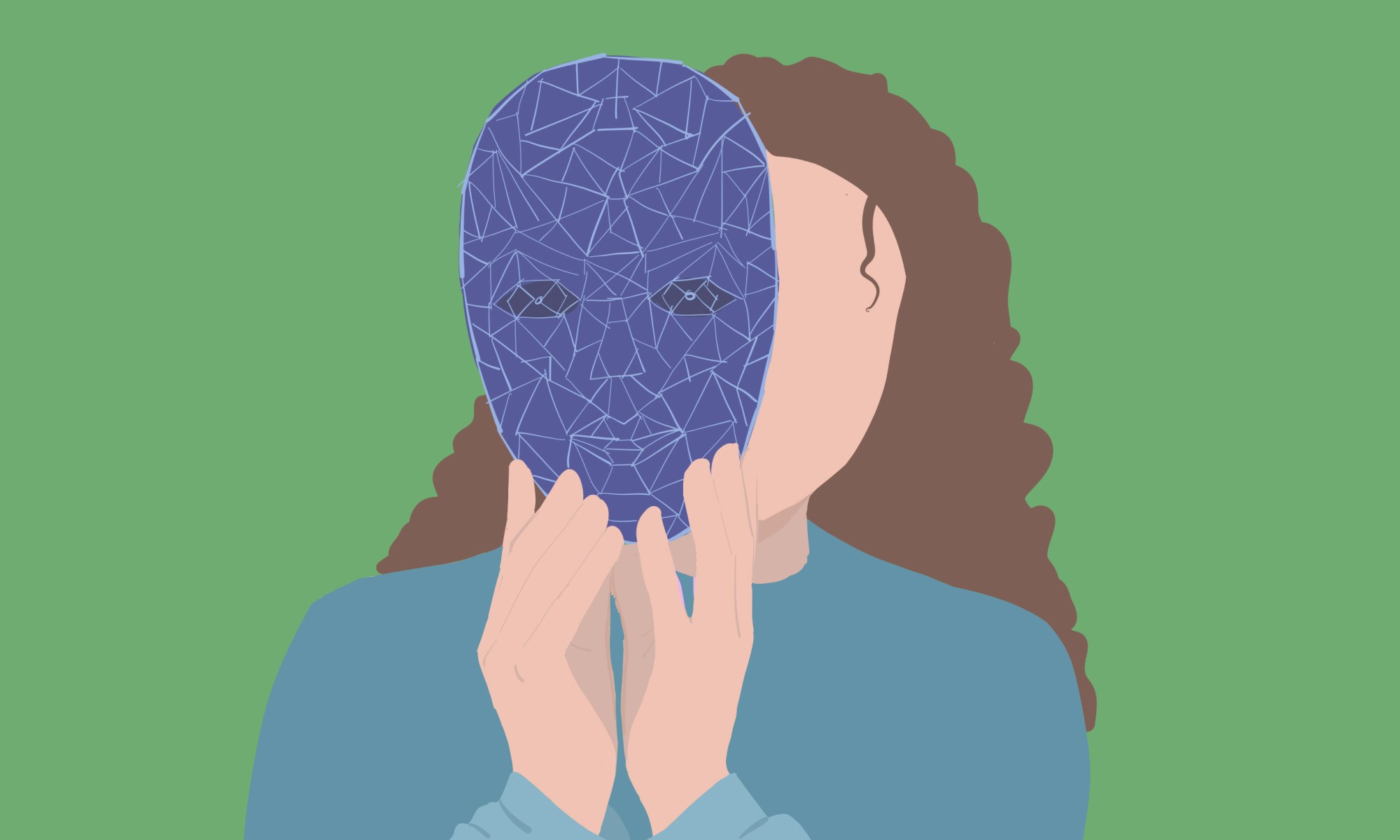
The ghosts of Facebooks past

My go-to social medium for a long time was Facebook. I became a ‘member’ in 2009, a year before I graduated from secondary school, and I’ve been visiting the platform ever since (nowadays almost exclusively to check on my favourite internet-dog, Tucker).

Although I still occasionally share something myself on the platform, I’m increasingly confronted with ‘This Day x Years Ago”-posts. And I’ve noticed… that I cringe every time I read one of my older posts. Why? They’re not particularly special or offensive, they’re just insignificant details about my life at that time.

Is “insignificant” the key word there? Is the uncomfortable feeling that creeps up on me when reading my old memories fuelled by a sense that nobody cares about this thing I’ve shared? Did I really think that these bits of info were interesting to others at the time? Or was it just a matter of getting it off my chest?

I wonder if I am the only one who experiences this. Talking to some of my friends, it turns out that they recognise the feeling, although for some it’s just a matter of being annoyed at how whiny our younger selves were (or at least came across as).

It seems odd, this shame-like feeling that accompanies reading my earlier memories. Thinking out loud, I wonder whether it’s because I’m faced with the realisation that these memories are and have been public (to some degree) ever since I posted them. However, I have the same cringy sensation when stumbling upon an old journal entry in some notebook. Not sure what sort of psychological mechanism underlies this, but I ám pretty sure I’ll even cringe when I read what I’m writing now in a couple of years.

Do you recognise this experience? And why do you think this is? Feel free to let me know in the comments. I’d love to hear from others about this!

We need to do social media justice

Yay! I’m happy to announce that my latest paper, written together with my awesome supervisors, has been officially published in the new APA journal Technology, Mind and Behavior! The paper, titled Toward Improved Methods in Social Media Research, has been a culmination of the literature review I started in the beginning of my PhD project, and I’m happy to see this labour of love out in the world.

What once started as a ‘nice-to-have’ overview of the studies that have been done in the field of social media use and wellbeing, turned into a (critical) discussion of the way in which this research has been done so far. And guess what — you get what you give.

Meaning, if we approach a complex phenomenon like digital tech use (and social media use, specifically) with no level of detail, we get no level of detail back in terms of insight. Unfortunately, that level of detail has been missing in many studies on social media use and wellbeing so far. It’s not all bad, though, and it’s definitely not too late to learn from our mistakes.

However, what was most important to me and my co-authors was to make sure that we contributed to solving the problems as well. So, crucially, what started as a review turned into a — hopefully helpful — collection of concrete suggestions for how we could do better in the future! If we employ more detailed, sensitive and flexible research methods (which unfortunately will require greater effort on our part), we will inevitably gain better insights.

Research is tough, and the only way to move forward is to acknowledge the difficulties we face when researching such complex phenomena. (: The paper is open access, which means you can read all of it without having to pay for it, so please feel free to check it out and let me know what you think.

Person-centric AI

During my time at the GEMH Lab I’ve become more and more interested in the relationship that people have with technology. Not only in terms of ‘how do we use it’ and ‘what can we do with it’, but also how technology has been inspired by us.

In particular artificial intelligence is meant to mimic us in some ways (and do better than us, in others). However, recently I’ve come to believe that we’re not inspiring artificial intelligence and digital social technology to a large enough extent, and I’ll explain what I mean in a second.

When you Google ‘person-centric’ (or ‘human-centric’/’people-centric’) AI, you get pages that refer to making AI understandable for humans. Although this is an important task (especially in the light of worries that we might be losing our grip on artificial intelligence and what it does), I was surprised to read that this is apparently what the Internet says that ‘person-centric AI’ is.

What about the psychology that goes into these tools, though? How do we strive to make sure that what we build is not just convenient and efficient, but also in line with our understanding of human psychology? Is the field of AI sufficiently sensitive to theories about human psychology? I’m getting the sense that it isn’t (but feel free to prove me wrong, see the end of my post ;).

Why does it matter? Because in order for human beings to benefit the most from technology, it needs to be sensitive to their needs. Things like preservation of the sense of agency, for instance, seem to be rarely taken into account, following an ‘aren’t you happy someone/something is doing it for you?’-approach. However, a loss of sense of agency can not only lead to reluctance to use a certain technological tool, it can also lead to decreased life satisfaction. In a world where we are increasingly surrounded by (AI) technologies and tools, such considerations are as vital as ever.

I’m thinking… that I’d really like to work towards building AI tools that make sense from a human psychological perspective. We need to consider the human mind behind every AI tool, and this is something that – at least, so it seems – is still underrepresented in the field of artificial intelligence. However, if you read this and are working on such an approach to AI, hit me up — I’d love to hear about your work!

Outliers

About a year ago, I started listening to a podcast that was recommended to me by my office mate, Jan. We both share an interest in machine learning, and he recommended that I listen to (among others) a show called Linear Digressions. I pretty much instantly fell in love with this podcast, as it discusses practical, easy to relate to applications and stories around machine learning.

One episode in particular, though, has stayed with me ever since I listened to it. Podcast hosts Katie and Ben discussed outliers in data: Outliers are values that seem to fall outside of the general range of values that you expect or find in your dataset.

As a researcher, now and again I am confronted with outliers in my data as well, and in my own education I have been taught (like many others) that outliers are generally something to get rid of as soon as possible, since they may violate assumptions of some of the most-used analyses in social sciences (rendering them inappropriate for your data).

In Linear Digressions, though, Katie discussed a fascinating story about why outliers don’t always deserve the flack that they catch. It’s true; these strange values might be caused by typing or measurement errors. Sometimes, however, these oddballs can tell us so much about the world out there, the one we’re trying to study. In fact, in Katie’s story, the outlier helped solve a public health crisis in 19th century London! For anyone who is intrigued, I highly recommend the episode. It’s as informative about data as it is about 19th century history, actually.

This is opened my eyes to how fascinating outliers in data can really be, and actually made me wish for more outliers in our data! Their potential for important new insights has captivated my imagination ever since.

I hope that such stories can make more people aware of the beauty of outliers. Can’t help but draw this parallel between societies and data; in both cases outliers deserve much more care and attention than they have been getting.

Share the load

The emergence of social networks (all the way back in 1999 with platforms like LiveJournal and SixDegrees) has provided people all around the world with an opportunity to share information about themselves and get to know people from across the country, and eventually, the globe.

Networks such as Facebook (2004), and Instagram (2010) have evolved to allow its users to share as much information about themselves as they would like (or wouldn’t like). Photos, videos, locations, activities and even feelings can be shared, in addition to the more recent 2016 feature of being able to live stream what you’re doing through Facebook. And we, being the social and curious creatures that we are, have thrown ourselves at this plethora of information like there’s no tomorrow. We want to know how others are doing, ánd we want to show the rest of the world how wé are doing, and that’s where the situation gets interesting.

We don’t want to just show the world how we’re doing. We want to show the world how well we’re doing. Photos are edited, stories embellished and scenes are directed. And all of that is completely understandable. Societies (not just human ones) revolve around its members’ social status and we, as members of the human society, want to be found important, interesting and worth paying attention to. 

Others are doing the exact same thing. They, too, want to be seen as the coolest, prettiest and most interesting they could possibly be. And this is precisely where social media can become a source of serious self-doubt. The content posted on social networks by other users is often carefully moderated and produced, and yet that is the only thing we see. Whereas we know exactly how mundane and glamour-less our own lives are in reality, the only snapshots we are presented with from others’ lives are exciting and vibrant. If their lives are so cool and interesting, then what are we doing wrong? Why are we not having all that fun? 

But are those moments of (feigned?) bliss and perfection the only things that matter to us? Of course not! At the GEMH Lab we think that a key part of mental health is how we talk to others about our lives, our stories. Formulating and sharing authentic life stories (i.e., true to your interests and experiences) with others can be a major source of increased mental health. In fact, the lack of such authentic story-telling behaviours on social media might be the driving force behind some of the negative associations and experiences that are reported in relation to social media use.

However, the tide is turning! For instance, a new trend has recently developed in academic circles: sharing your CV of failures. Rather than portraying all your accomplishments and glossing over the bumps in the road that you’ve experienced, academics are now encouraged to share with others their real experiences, including all of the times they were rejected for a job, or didn’t get a grant.

Such public acknowledgements help (young) people all around the globe realise that – as my (Russian) mother loves to say – “красота в контрасте” (“krasota v kontraste“): beauty lies in the contrast. Sure, we experience many highs, but those highs only mean so much because we also know the lows. And we should share those lows more often.

At the GEMH Lab, we feel that this not only requires a shift in societal mindset (which is thankfully already happening), but also new digital environments that allow and encourage us to reflect on what is truly important to us, and share those stories with others in a safe (i.e., non-performative) and authentic way. I am very happy to say that we are currently on the way to designing such an environment, which is a project I hope to share more with you about in a later blog. Stay tuned!

An earlier version of this blog post can be found on the GEMH Lab website. Here, I have updated that post to match my current view.

Why being social is so important to us

We are immensely social beings: we enjoy having friends and sharing knowledge or experiences with them, and most people try to connect with other people first chance they get. It’s not really surprising that social media have increased in popularity as much as they have, only further illustrating our desire to see and be seen, to talk to and be talked to. Why are we so drawn to social activities, though? Is there more to this desire to be part of a collective? The answer is ‘yes, there is’, and I’ll briefly explain why.

In 2003, a study conducted by researchers in the lab of neuroscientist Matthew Lieberman set out to investigate the brain’s response to social rejection1. They found, surprisingly, that the brains of their participants responded very similarly to the way the brains respond when a person is in physical pain. The researchers concluded that the human brain processes social discomfort and hurt the same way it does physical pain, even though there is no material cause. Surprising? Absolutely, especially given the fact that another study has found that painkillers affect this ‘social pain’ the same way they do ‘real’, physical pain2. But what is it about social pain that is so crucial for it to be equated to actual physical pain by our brains?

Let’s wind back, all the way to when our lives began: birth. Suffice to say that not all animals are born equally self-sufficient. Baby foals are up and running within hours of their arrival to this world, while human babies are, well… helpless. The first two months of life find human babies unable to lift their own heads without help from others, let alone stand and walk around. The only reason any of us has survived infancy is simply because we all have had a caregiver who felt such a strong connection to us that they were willing to take care of us and feed us over many years. It also helps that these caregivers feel pain when being separated from their child, same as a baby cries and experiences pain when being separated from their caregiver. 

Aeons ago our ancestors discovered that tackling problems threatening their survival was best done collectively. Sharing knowledge, food, tools and other resources helped them hunt animals, beat famine and secure the survival not only of their lives, but their genes as well. And I don’t mean Levi’s. Simply put, humans depend on other humans for survival, whether it be within their own lifetime or as a species.

Further illustrating the importance of a social network is the fact that humans, over the many thousands of years of living and surviving in groups, have developed seemingly dedicated brain regions, focused on ‘social thinking’. These important skills include empathy and being able to imagine how other people are feeling in a given situation, but also being able to predict others’ behaviours based on how we would behave ourselves. All of these dedicated skills help us work, play, and share with other people, and are so much ingrained in our functioning that a specific neural network has developed to enable us be better social beings.

Another psycho-biological theory called the ‘social baseline theory’3 states that the human brain is made to function in social contexts and that, when social support is lacking, the brain is less able to handle everyday stressors. Instead, at a ‘social baseline’ (the situation in which people perceive they can expect help from others if they find themselves in a pickle), the brain performs best, and draws strength and resilience from this invisible (and maybe even imaginary!) safety net. You have to admit, feeling like you have someone to turn to makes obstacles easier to overcome.

To conclude, I hope I have been able to illustrate shortly how important being kind to one another is ; remember that when rejecting someone or excluding them, you most likely cause them to experience the same kind of pain if you were to harm them physically. We all need each other, and being there for one another will make the lives of everyone involved a lot easier.

Further reading

  1. Eisenberger, N.I., Lieberman, M.D., Williams, K.D. (2003). Does rejection hurt: An fMRI study of social exclusion. Science. 302:290–2.
  2. DeWall, C.N., MacDonald, G., Webster, G.D., Masten, C.L., Baumeister, R.F., Powell, C., Combs, D., Schurtz, D.R., Stillman, T.F., Tice, D.M., Eisenberger, N.I. (2010). Acetaminophen reduces social pain: Behavioral and neural evidence. Psychological Science. 21:931–7.
  3. Beckes, L. and Coan, J.A. (2011). Social baseline theory: The role of social proximity in emotion and economy of action. Social and Personality Psychology Compass. 5: 976-988.